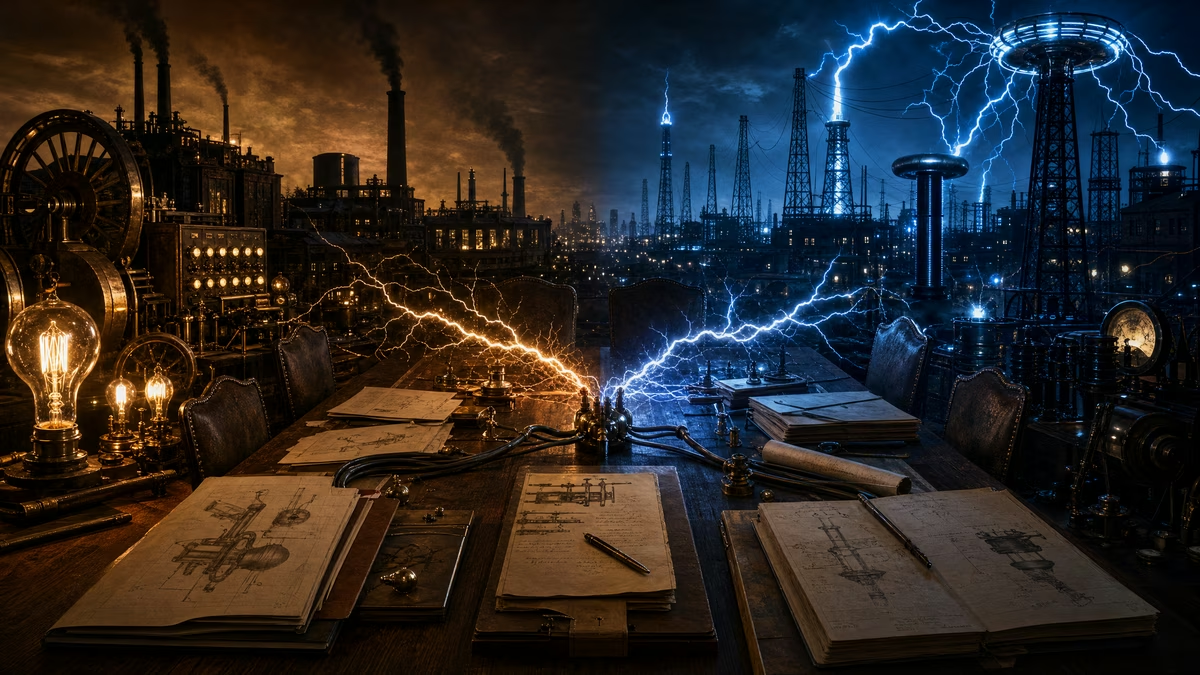
Edison’s anti-AC campaign got so nasty that the fight over electricity helped drag a Westinghouse generator into America’s first electric-chair execution. Yes, really. ⚡💀
This wasn’t two geniuses politely disagreeing in lab coats. It was patents, PR warfare, terrified newspapers, dead animals, corporate money, and one very dramatic race to control the future. 🔥
⚔️ The Real Fight Wasn’t Edison vs. Tesla
Bestie, the poster says Edison vs. Tesla, but the corporate cage match was really Edison’s DC empire versus George Westinghouse’s AC business, powered by Tesla’s patents. 👀
Edison backed direct current, which flowed one way and worked fine near a power station. Tesla and Westinghouse pushed alternating current, which could be transformed to higher voltages and sent farther for cheaper. Shockingly, “cheaper and better at scaling” became a problem for the guy selling the old system. 🫠
🔥 Edison Went Full PR Villain
Instead of just saying “my tech is better,” Edison’s side pushed the idea that AC was basically death with wires. Apparently the marketing plan was: scare the public until they associate your competitor with instant doom. Iconic? No. Effective? Unfortunately, kind of. 😱
Edison’s campaign included public animal electrocutions using AC to prove it was dangerous. Not even joking. This was the 1880s version of a smear ad, except somehow worse because everyone involved needed therapy. 💀
🪑 The Electric Chair Twist
When New York looked for a “more humane” execution method than hanging (because bureaucracy loves a nightmare), electricity entered the chat. Edison, who opposed capital punishment, still testified that AC would be the fastest deadly current. Because of course there’s a loophole. 🏛️
William Kemmler became the first person executed in the electric chair in 1890, and the chair used a Westinghouse AC generator. Westinghouse reportedly hated that his technology was being branded as execution tech. Can you imagine inventing power infrastructure and getting dragged into state-sponsored horror? 😭
💅 Tesla Had the Better Receipts
Tesla sold key AC patents to Westinghouse in 1888, giving the company the tech it needed to make AC commercially powerful. Edison had fame, factories, and vibes. Tesla had math that could travel. ⚡
Then came the flex: Westinghouse beat General Electric’s bid to light the 1893 Chicago World’s Fair, offering $399,000 versus GE’s $554,000. Translation: AC walked into the group project and did it cheaper. 🤯
🌊 Niagara Falls Ended the Argument
The real victory lap came at Niagara Falls. Westinghouse won the contract, and in 1896 AC power from the falls lit Buffalo, New York, 26 miles away. 🏛️
By then, Edison had already left the electric-light business, and General Electric was moving toward AC too. Imagine fighting a whole corporate war and then your own legacy company basically says, “Actually, the other guy made points.” Wild, right? 💅
💀 The Twist Everyone Gets Wrong
You’ve probably heard Edison personally electrocuted Topsy the elephant to win the War of Currents. Nope. Rutgers’ Edison Papers says Edison had no role in Topsy’s 1903 death, which happened more than a decade after the war was over.
That myth survives because it’s perfectly villain-coded. But the real story is darker: corporations didn’t need one cartoon villain. They had patents, press, public fear, and profit doing the dirty work. 👀
🔥 The Takeaway
The War of Currents wasn’t just science drama. It was Big Tech before Big Tech: branding, fear, lawsuits, and billion-dollar infrastructure dressed up as “innovation.” ⚔️🔥
📚 Sources & More Reading
The War of the Currents: AC vs. DC Power - Department of Energy
How Edison, Tesla and Westinghouse Battled to Electrify America - HISTORY
The Current Wars - Rutgers Thomas A. Edison Papers
Myth Buster: Topsy the Elephant - Rutgers Thomas A. Edison Papers