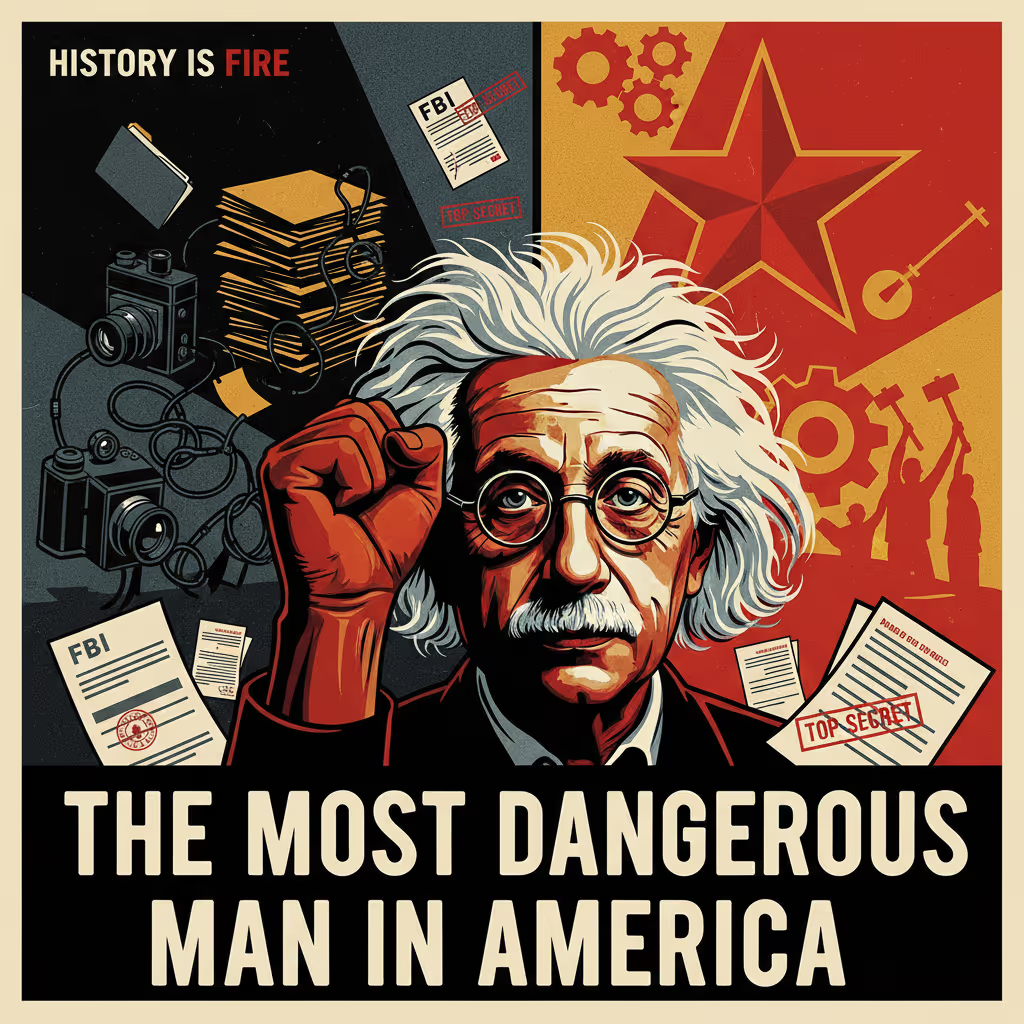
You know Albert Einstein. The wild-haired genius, the E=mc² guy, the face on a million dorm room posters. He's the OG science rockstar. But what if I told you the FBI thought he was one of the most dangerous men in America? J. Edgar Hoover, the FBI's top dog for nearly 50 years, was so obsessed with Einstein that he built a 1,400-page file on him, tracking his mail, his phone calls, and even his trash. Why? Because behind the gentle, sock-hating facade was a political radical who was unapologetically socialist and hated nationalism with a passion.
The Unbothered Socialist King
Long before it was a trending topic on Twitter, Einstein was a full-throated socialist. In 1949, he literally wrote the book—or at least, the essay—on it. For the first issue of the magazine *Monthly Review*, he published "Why Socialism?", a scathing takedown of capitalism. He called it a "predatory phase of human development" that creates a "grave evil" by crippling individuals and promoting a soul-crushing, competitive mindset. His solution? A planned, socialist economy where the means of production are owned by society itself, and an educational system focused on social goals, not just personal success. He wasn't just some armchair academic, either; he lived his beliefs, advocating for civil rights, racial equality, and a world government long before it was cool.
From Pacifist to "Public Enemy"
Einstein was a lifelong pacifist who renounced his German citizenship at 16 to avoid military service. He called nationalism "the measles of mankind." So, when he arrived in America in 1933 after fleeing the Nazis, he wasn't about to stay quiet. He spoke out against racism, calling it America's "worst disease." He co-chaired an anti-lynching committee with Paul Robeson. He urged young people to refuse military service. To a government deep in the throes of Cold War paranoia, this wasn't just dissent—it was dangerous. The FBI saw a man with a global platform, a Nobel Prize, and a knack for getting people to listen, and they were terrified. They were convinced he was a subversive, a communist sympathizer, and a threat to national security.
The 1,400-Page Glow-Up
The FBI's file on Einstein is a wild ride. It's a mix of gossip, hearsay, and out-of-context quotes. They accused him of everything from developing a death ray to being the secret head of a communist spy ring. They desperately wanted to deport him, but his fame and the lack of any actual evidence made it impossible. The file is a testament to the paranoia of the era, but it's also a badge of honor. It shows that Einstein was more than just a brilliant scientist; he was a man of deep conviction who wasn't afraid to challenge the powers that be. He was, in the FBI's own twisted way, a true influencer—so influential, in fact, that they considered him a threat to the American way of life.
In the end, Einstein was never charged with any crime. He remained in the United States until his death in 1955, a beloved public figure and a thorn in the side of the establishment. His story is a powerful reminder that the most dangerous ideas are often the ones that challenge us to be better, and that the people who change the world are rarely the ones who play by the rules.
Sources & More Reading
Monthly Review - "Why Socialism?" by Albert EinsteinRead Einstein's original 1949 essay where he lays out his case for a socialist economy and critiques capitalism.https://monthlyreview.org/2009/05/01/why-socialism/
The New York Times - "New Details Emerge From the Einstein Files"An article detailing the declassified FBI files on Einstein, revealing the extent of the surveillance and the paranoia of the era.https://www.nytimes.com/2002/05/07/science/new-details-emerge-einstein-files-fbi-tracked-his-phone-calls-his-trash.html
Wikipedia - "Political views of Albert Einstein"A comprehensive overview of Einstein's political beliefs, from his pacifism and internationalism to his views on socialism and civil rights.https://en.wikipedia.org/wiki/Political_views_of_Albert_Einstein