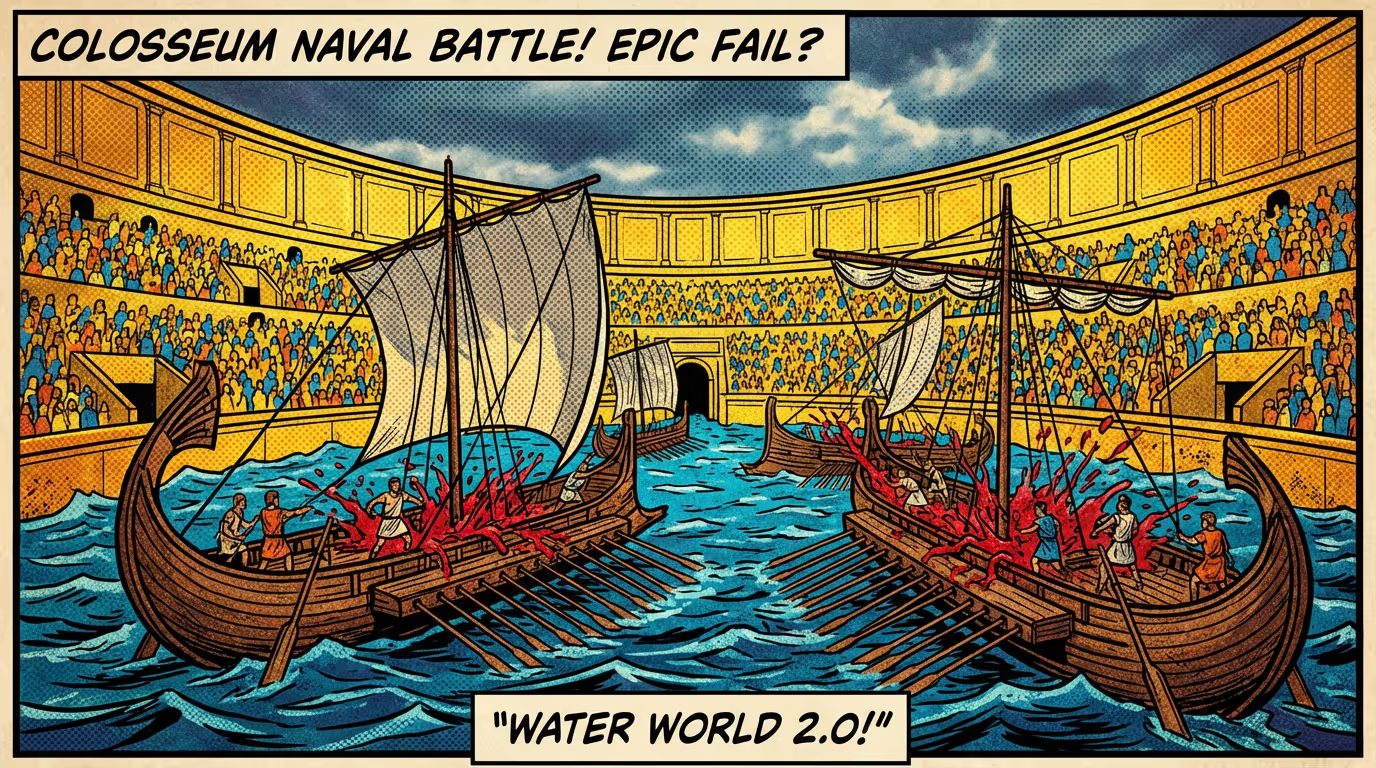
You think your bathtub is cool? The Romans flooded the freaking Colosseum to stage fake naval battles. 🌊 Yes, you read that right. They filled the world's most famous amphitheater with millions of gallons of water and had prisoners of war fight to the death on ships for entertainment. It was called a naumachia, and it was one of the most insane spectacles in ancient history.
But did it actually happen? For years, historians and archaeologists have been debating whether this was even possible. Let's dive into the evidence.
The Evidence: How Did They Flood the Colosseum?
The idea of filling the Colosseum with water seems impossible, but Roman engineering was on another level. Here's how they likely pulled it off:
1. Waterproofing the Arena: According to Dr. Martin Crapper, a civil engineer who studied the Colosseum, the underground chamber (the hypogeum) was partially lined with mortar, a clear sign of early waterproofing. This would have prevented the water from immediately seeping into the ground.
2. The Aqueducts: Rome's legendary aqueduct system was the key. A branch of the Aqua Claudia aqueduct, built by Emperor Nero, was located on a nearby hill. Dr. Crapper estimated that by using a network of pipes, the Romans could have filled the arena to a depth of 1.5 meters (about 5 feet) in just over two hours. With a temporary wooden aqueduct, it might have taken as little as 40 minutes.
3. Drainage: The Colosseum was built on fluvial soil, meaning there was already flowing water beneath it. Geologist Dr. Cristina Di Salvo found that water could easily flow through the Colosseum and drain out through sewers into the nearby Tiber River. Water management was a fundamental part of its design.
The biggest problem for historians? No actual pipes have ever been found inside the Colosseum, just stone inlets where they might have been. This lack of physical evidence has fueled the debate for centuries.
The Spectacle: What Were Naumachiae Like?
Naumachiae were incredibly rare, happening only a handful of times in history. They were reserved for the most epic celebrations, like Emperor Titus's inaugural games in 80 AD, which featured a naval standoff of 3,000 men. These weren't just theatrical performances; they were real battles with real casualties.
The fighters were typically condemned criminals and prisoners of war. They would be forced onto specially made, smaller ships and goaded into killing each other for the amusement of 50,000 screaming spectators. According to the historian Cassius Dio, one naumachia in 86 AD was hit by a violent rainstorm that led to the deaths of all the combatants and many of the spectators. 💀
These events were also massive parties. The poet Ovid wrote that the crowds were so thick with people that it was the perfect place to find a romantic partner. The chaos was filled with drunkenness, debauchery, and prostitutes.
So, Did It Really Happen?
While the physical evidence is scarce, the historical accounts and engineering studies strongly suggest that the Romans did, in fact, flood the Colosseum for naval battles. It was a testament to their incredible engineering prowess and their insatiable appetite for violent entertainment. The fact that we're still debating it 2,000 years later just shows how legendary these events were. Modern stadiums have retractable roofs, but have they ever hosted a full-blown naval battle? We think not. Roman engineering remains undefeated. 🔥
Sources & More Reading
1. Science Friday - "'Gladiator II' And The Evidence For Colosseum Naval Battles"
A great overview of the modern scientific and archaeological debate, including interviews with engineers and geologists who have studied the Colosseum.
2. Atlas Obscura - "Romans Once Filled the Colosseum With Water and Staged an Epic Mock Sea Battle"
This article provides a colorful history of naumachiae, including details about the different battles and the social context surrounding them.
3. Through Eternity Tours - "Was the Colosseum Covered? The Story of the Velarium"
While focused on the roof, this article mentions that the sailors who operated the velarium were also involved in the naumachiae, providing a direct link between the two incredible feats of engineering.