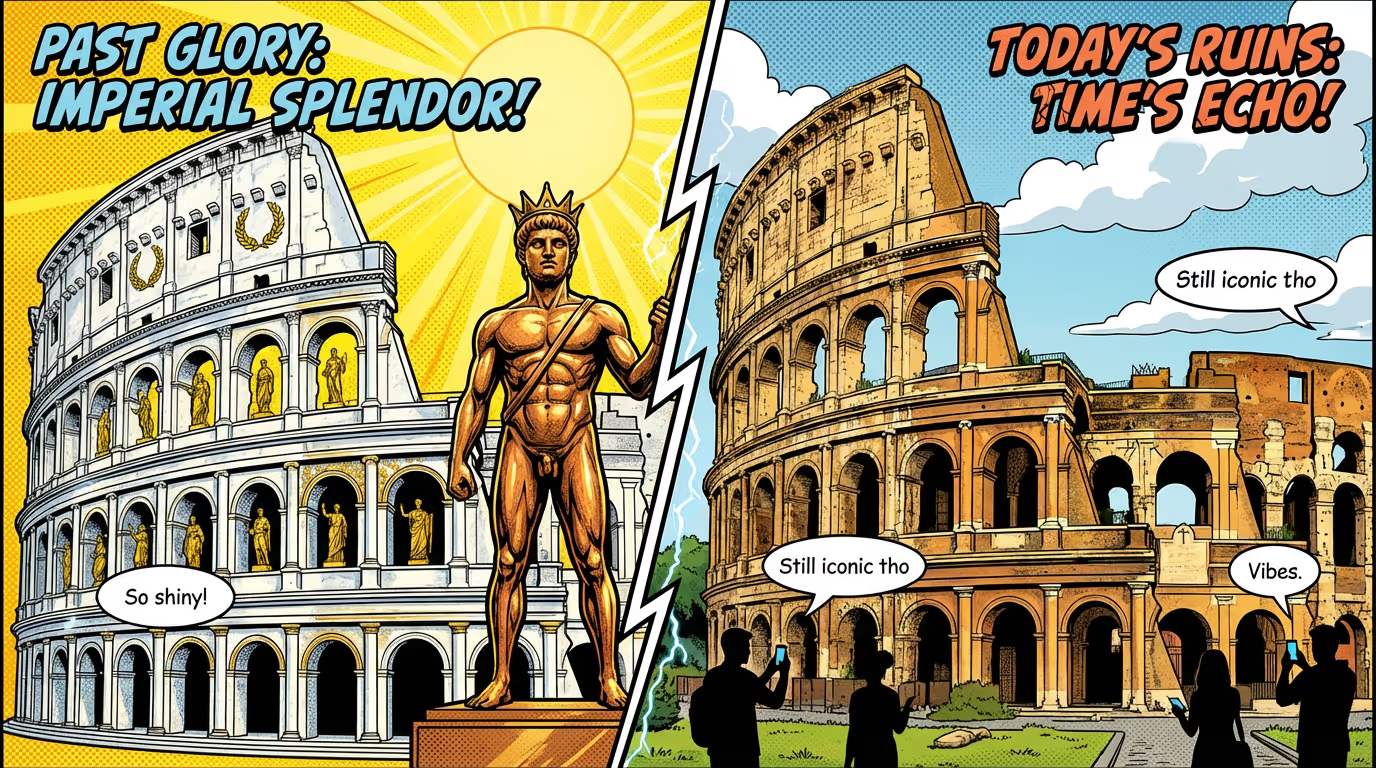
When you see the Colosseum today, you see a magnificent ruin—a skeletal ghost of honey-colored stone. It's impressive, but it's a shadow of its former self. In its heyday, the Colosseum was a gleaming, white marble-clad spectacle, adorned with 156 statues and fronted by a 100-foot-tall bronze statue of Emperor Nero. It wasn't just an arena; it was an open-air museum designed to scream Roman power and prestige. So, what did it originally look like, and what happened to all that bling? ✨
A Gleaming White Marvel
Forget the bare travertine stone you see today. When the Flavian Amphitheater was inaugurated in 80 AD, it was almost entirely covered in brilliant white marble. The arches of the second and third floors were filled with 156 statues depicting gods, heroes, and emperors, creating a stunning visual narrative of Roman mythology and power. The interior was just as lavish, with marble seating, decorative reliefs, and busts of important figures lining the corridors. It was designed to be a work of art, a symbol of the Flavian dynasty's glory meant to erase the memory of the despised Emperor Nero.
The entire structure was a testament to Roman engineering and aesthetic ambition. It was a building meant to inspire awe and intimidation, a shining beacon of imperial might that could hold between 50,000 and 87,000 spectators.
The Giant Statue of Nero (That Gave the Colosseum Its Name)
As if the marble and statues weren't enough, standing just outside was one of the ancient world's most colossal statues: the Colossus of Nero. This 30-meter (98-foot) bronze statue was originally built by Nero for his own extravagant palace, the Domus Aurea. After his death, Emperor Vespasian, in a classic Roman PR move, gave the statue a makeover. He replaced Nero's head with one of the sun god, Sol, complete with a radiate crown, and renamed it the "Colossus Solis."
Around 128 AD, Emperor Hadrian had the massive statue moved—a feat requiring 24 elephants—to a spot right next to the Flavian Amphitheater. Over time, the amphitheater's popular name became linked to the giant statue nearby. The medieval historian Bede famously wrote, "As long as the Colossus stands, Rome will stand." People started calling the amphitheater the "Colosseum," and the name stuck.
From Marvel to Ruin
The Colossus of Nero is long gone, likely toppled by earthquakes or melted down for its bronze during the Sack of Rome in 410 AD. All that remains are the concrete foundations of its pedestal. The Colosseum itself, stripped of its marble and statues, was left to decay, its grandeur slowly eroded by time, earthquakes, and centuries of quarrying. The magnificent ruin we see today is a testament not only to Roman genius but also to the relentless passage of history. 🔥
Sources & More Reading
1. TheColosseumRome.com - "Colosseum Statues"
This article provides a detailed look at the 156 statues that once adorned the Colosseum, explaining their purpose and what happened to them.
2. Wikipedia - "Colossus of Nero"
A comprehensive history of the giant bronze statue, its transformations, and its connection to the Colosseum's name.
3. Italy Rome Tour - "What happened to the marbles that decorated the Colosseum?"
This source details the original marble covering of the Colosseum and begins to explain the long history of its removal and reuse.