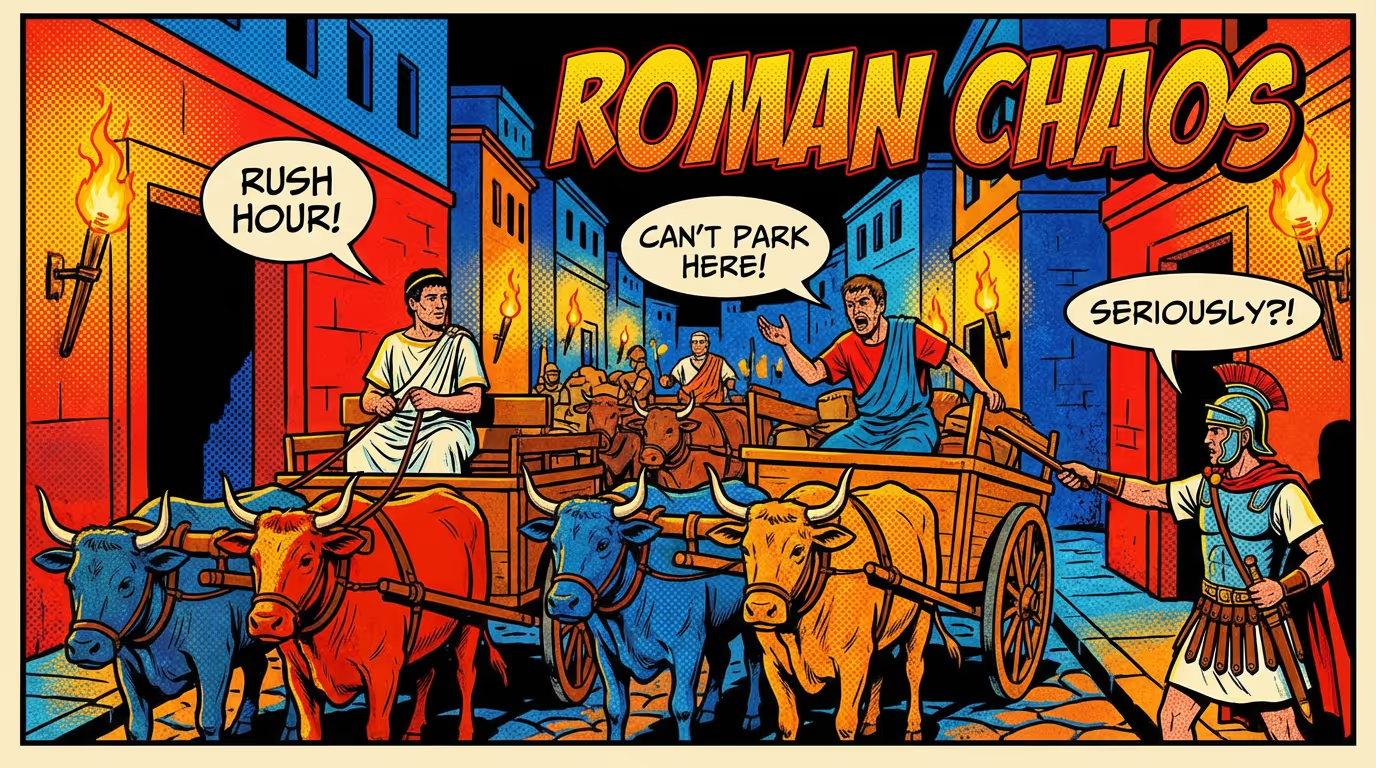
Imagine a city so crowded that all wheeled traffic was banned during the day. 🤯 That was ancient Rome. The city had a million people, and the streets were so jammed with pedestrians, litters, and construction that Julius Caesar had to lay down the law.
🚗 The OG Traffic Ban
In 45 B.C., Julius Caesar enacted the Lex Iulia Municipalis, a law that banned all carts, wagons, and chariots from the city of Rome from sunrise until two hours before sunset. ☀️ The only exceptions were for:
- Construction vehicles (gotta build those temples)
- Garbage carts (gotta take out the trash)
- Vestal Virgins on official business (don't mess with them)
Everyone else? You had to park your ride at the city gates and walk. Or, if you were rich, get carried around in a litter by your slaves. 💅
🌙 The Night Shift
So when did all the deliveries happen? At night. 🌃 Once the sun went down, the city turned into a chaotic mess of rumbling carts and shouting drivers. The poet Juvenal complained that the noise was so bad you couldn't sleep. 😴
The streets were narrow, there were no traffic lights, and arguments over the right-of-way were common. It was basically the ancient world's version of road rage. 🤬
👮 The 'Little Bucket Fellows'
Who enforced these rules? The Vigiles, Rome's official police and fire department. They were nicknamed the "little bucket fellows" because they carried buckets for firefighting. 🔥 They patrolled the streets at night, breaking up fights between wagon drivers and keeping the peace.
So next time you're stuck in traffic, just remember: it could be worse. You could be in ancient Rome, where the traffic was so bad they had to ban it. 😂
Sources & More Reading
1. Science News - "Ancient Rome forbade downtown traffic in day"
A great summary of the Lex Iulia Municipalis and how it worked.
2. Penn Museum - "The Embattled Driver in Ancient Rome"
This article dives into the chaos of Roman streets and the challenges faced by drivers.
3. Forbes - "How Ancient Rome Restricted Four-Wheeled Traffic"
A modern look at Rome's ancient traffic solutions and what we can learn from them.