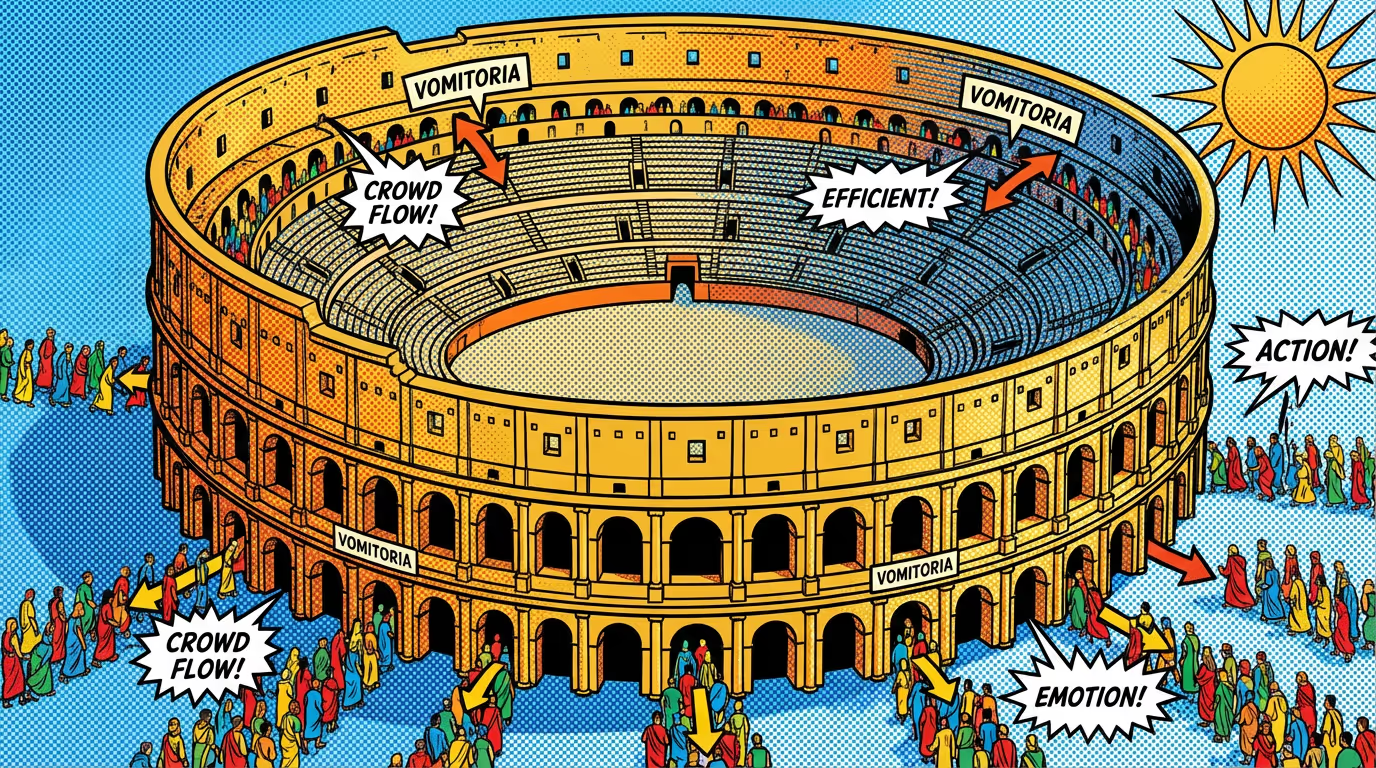
Ever been stuck in a human traffic jam trying to leave a concert or a football game? It's the worst. Now imagine 50,000 people trying to exit a stadium at the same time. Chaos, right? Not for the Romans. The Colosseum, built 2,000 years ago, had a crowd control system so advanced that it could evacuate its entire 50,000-spectator capacity in as little as 15 minutes. Some estimates even say 5-10 minutes. Modern stadiums could only dream. 🤯
The Genius of the Vomitoria
The secret to this incredible efficiency was the **vomitoria**. And no, it's not a room for binge-and-purge parties (that's a myth). The term comes from the Latin word *vomere*, meaning "to spew forth." A vomitorium is simply a wide, arterial corridor designed to disgorge massive crowds quickly and efficiently. The Colosseum had 80 of them.
Here's how it worked:
1. Numbered Entrances and Tickets: Just like a modern stadium, your ticket (a small clay or bone disk called a *tessara*) had your entrance number, tier number, and seat number. This directed you to one of the 76 public entrances, preventing bottlenecks at the gates.
2. Hierarchical Seating: The Colosseum's seating was strictly organized by social class. The emperor and senators got the best seats down low, while the common folk, women, and slaves were up in the nosebleeds. The vomitoria and internal corridors were designed to keep these social classes separate, ensuring that the plebs didn't accidentally rub shoulders with the elite.
3. Efficient Flow: The vomitoria were strategically placed to lead directly to the different seating tiers. This meant that spectators could move from the entrance to their seats without crossing paths with people from other sections. The result was a smooth, continuous flow of people, both entering and exiting.
An Engineering Marvel Ahead of Its Time
The Colosseum's design was revolutionary. The elliptical shape, the tiered seating, the use of arches to support the structure, and the intricate system of corridors and staircases were all designed with one goal in mind: to manage a massive crowd with maximum efficiency and safety. It was a masterclass in urban planning and architectural design.
The fact that a 2,000-year-old building could handle crowd flow better than many modern stadiums is a testament to the genius of Roman engineering. They didn't have computers or advanced modeling software. They had a deep understanding of geometry, physics, and human behavior. And they used it to create a structure that was not only beautiful and imposing but also incredibly functional.
So the next time you're stuck in a stadium exit crush, remember the Romans. They had it all figured out two millennia ago. Modern construction could never. 🔥
Sources & More Reading
1. ArchDaily - "What is a Vomitorium?"
This article provides a clear and concise explanation of what a vomitorium is, debunking the common myth and explaining its architectural purpose in the Colosseum and modern buildings.
2. Go See Write - "10 Facts About The Colosseum"
A fun and informative list of facts that includes the incredible evacuation time of the Colosseum, as well as details about the ticket system and seating capacity.
3. Wikipedia - "Colosseum"
For a comprehensive overview of the Colosseum's architecture, including its dimensions, materials, and crowd management features, Wikipedia is an excellent resource.