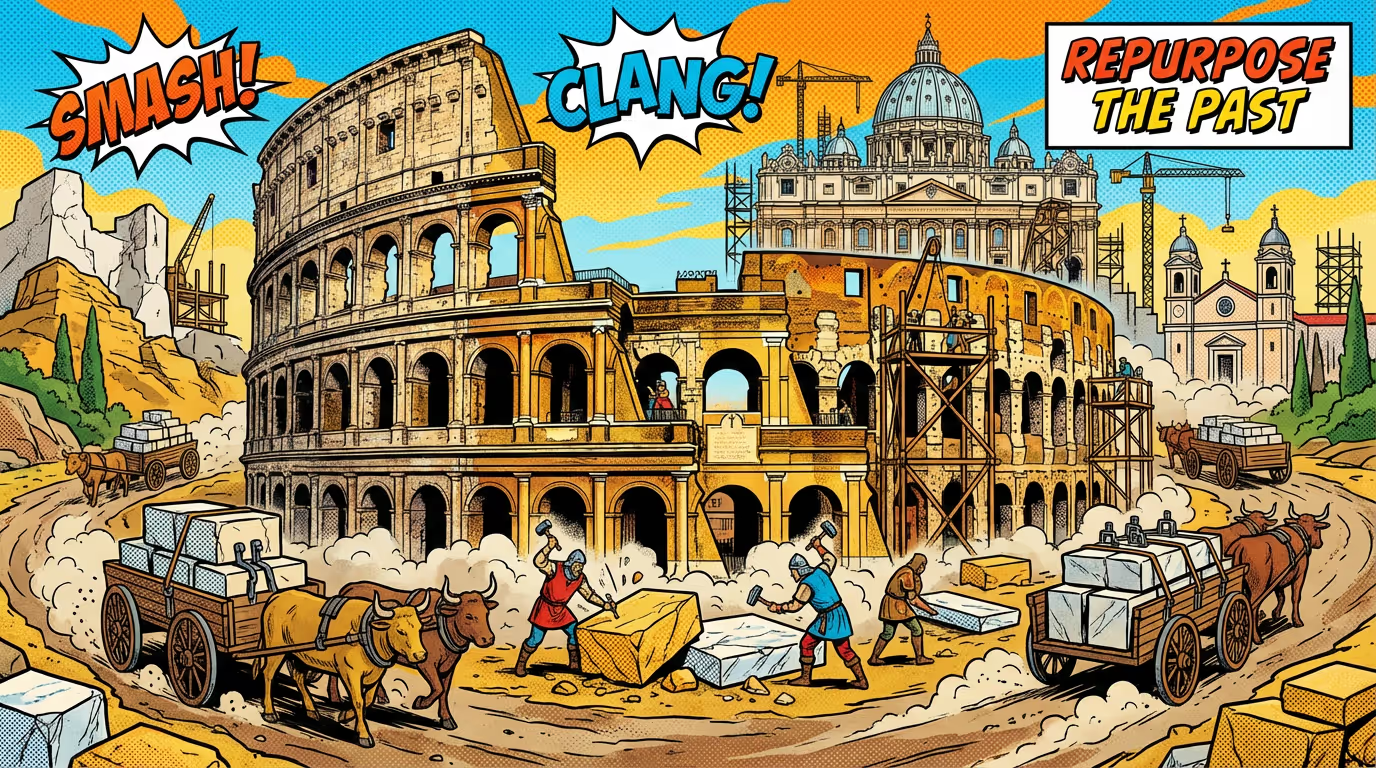
Ever wondered why the Roman Colosseum looks like a giant, half-eaten donut? The answer isn't just earthquakes and the passage of time. For over 1,000 years, the world's most famous amphitheater was treated as a massive, free-for-all hardware store. Popes, nobles, and ordinary citizens systematically stripped it of its materials, turning a symbol of imperial glory into a quarry for their own building projects. That's why half of it is missing. 🤯
The Great Roman Recycle Bin
After the fall of the Western Roman Empire in the 5th century, the Colosseum fell into neglect. The brutal gladiatorial games had long since ended, and the city of Rome was a shadow of its former self. The once-magnificent structure became a source of ready-made, high-quality building materials. It's estimated that only about one-third of the original Colosseum remains today.
The looting was relentless. Everything was taken: the beautiful white marble that covered the facade and lined the corridors was one of the first things to go. The huge travertine blocks that formed the main structure were pried out and repurposed. The Romans used iron and bronze clamps to hold the massive stones together, and these were painstakingly hacked out from between the blocks (leaving the pockmarks you see today), melted down, and reused for weapons or other construction. Lead pipes, tuff blocks, and bricks—if it could be carried away, it was.
From Amphitheater to Fortress to Quarry
In the medieval period, the Colosseum was repurposed multiple times. It was used as a fortress by powerful Roman families like the Frangipani and the Annibaldi, who built their castles within its crumbling walls. It also served as a cemetery, a housing complex, and even a stable.
But its primary role was as a quarry. The Church was one of the biggest culprits. Starting in the Middle Ages, popes granted licenses to quarry materials from the Colosseum. In the 14th century, the powerful Orsini and Colonna families were given permission to remove stones and marbles. In 1452 alone, one contractor removed 2,522 cartloads of material.
The travertine and marble from the Colosseum were used to build some of Rome's most famous landmarks: St. Peter's Basilica, Palazzo Venezia, Palazzo Barberini, the Basilica of San Giovanni in Laterano, and the Palazzo della Cancelleria. The sacking only stopped in the 18th century when Pope Benedict XIV consecrated the Colosseum as a sacred site in memory of the Christian martyrs who were believed to have died there. By then, the damage was done. The southern side of the amphitheater had been almost completely dismantled, leaving the iconic, broken silhouette we see today. The Colosseum didn't just fall into ruin; it was actively taken apart, piece by piece. 🔥
Sources & More Reading
1. Italy Rome Tour - "What happened to the marbles that decorated the Colosseum?"
This article provides a detailed list of the many famous Roman buildings that were constructed using materials quarried from the Colosseum over the centuries.
2. Wikipedia - "Colosseum"
The Wikipedia page offers a comprehensive overview of the Colosseum's history, including its post-classical use as a source of building materials.
3. TheColosseumRome.com - "Colosseum Statues"
While focused on the statues, this article also touches on the looting and earthquakes that led to the disappearance of the Colosseum's decorations and parts of its structure.