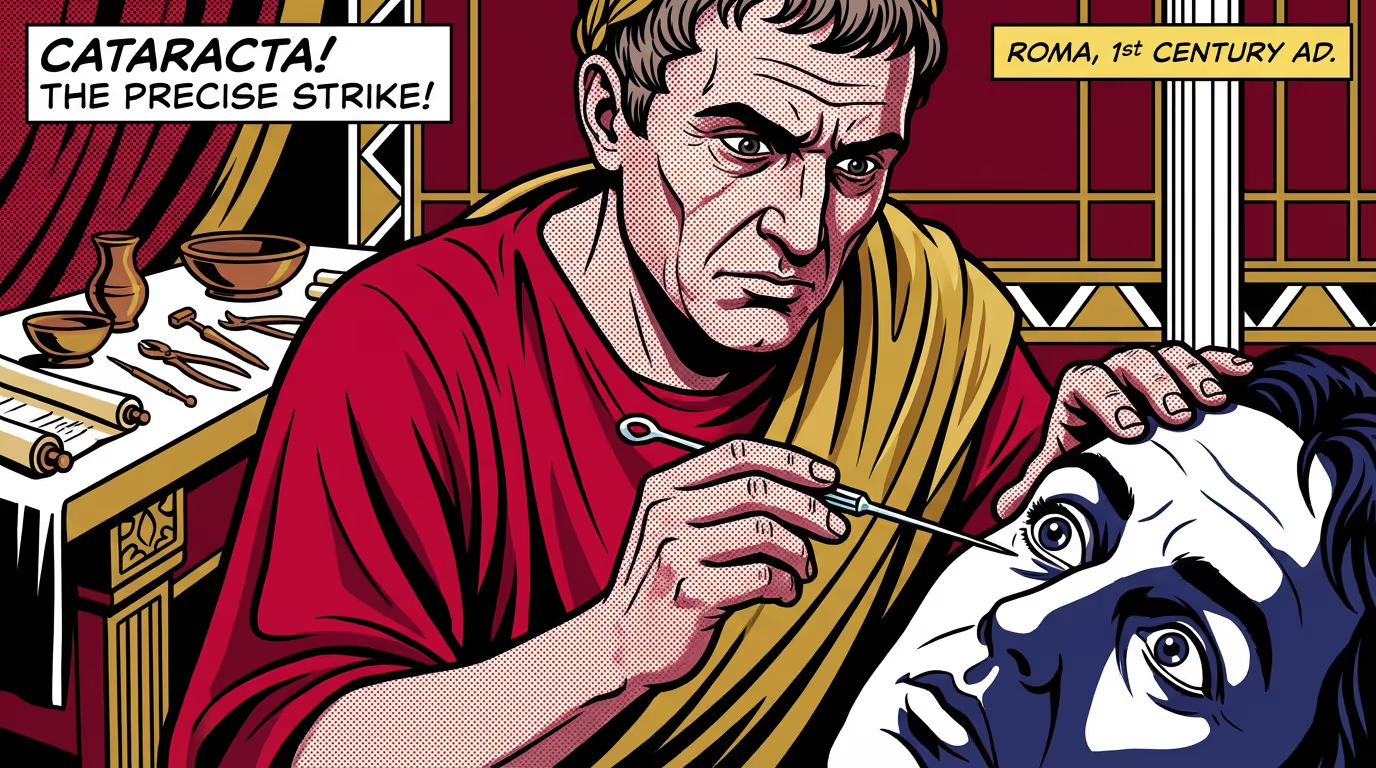
Imagine a surgeon coming at your eye with a sharp needle, with no anesthetic, to fix your blurry vision. It sounds like a horror movie, but for the ancient Romans, it was cutting-edge medical science. Roman surgeons routinely performed cataract surgery using a technique called "couching," and they did it with a level of precision that is shocking even by today's standards. They were literally fixing blindness 2,000 years ago. 🤯
How Roman Surgeons Cured Blindness
Cataracts are a clouding of the eye's natural lens, which makes vision blurry and can lead to total blindness. Today, we fix it with lasers and artificial lenses, but the Romans had a more… direct approach. The Roman medical writer Celsus, writing in the 1st century AD, left a detailed, step-by-step guide on how to perform cataract surgery.
The procedure, known as **couching**, involved inserting a sharp, thin needle into the side of the eye, between the iris and the sclera (the white part). The surgeon would then carefully use the needle to push the clouded lens downward, dislodging it from the field of vision and letting it drop to the bottom of the eyeball. With the opaque lens out of the way, light could once again enter the eye, restoring a degree of sight to the patient. It wasn't perfect vision, but for someone who was completely blind, it was a miracle.
The Tools of the Trade
This wasn't some back-alley procedure. Archaeologists have unearthed specialized Roman surgical kits containing incredibly fine needles, scalpels, and forceps, some of which look eerily similar to modern ophthalmic instruments. These cataract needles, known as *specilla*, were designed to be sharp enough to penetrate the eye but not so fine that they would break. Some even had a blunt end that could be heated to cauterize the wound after the procedure.
The skill required to perform this operation without modern microscopes or anesthetics is mind-boggling. The surgeon had to have an incredibly steady hand and a deep understanding of the eye's anatomy to avoid causing permanent damage. While some patients were undoubtedly blinded by the procedure, many experienced a successful restoration of their sight.
A Legacy of Medical Innovation
The Romans were pioneers in public health and military medicine, and their approach to eye care was no exception. They had specialized eye doctors, known as *oculists*, who manufactured their own ointments and remedies for common eye problems like conjunctivitis. They even had eye medicine stamps to label their products, much like a modern pharmaceutical company.
The practice of couching was so effective that it remained the standard treatment for cataracts for nearly 2,000 years, well into the 18th century. It was only then that surgeons began experimenting with actually removing the lens from the eye, a procedure that was far riskier at the time. So the next time you hear about modern medical marvels, remember that Roman surgeons were performing delicate eye surgery with nothing more than a needle and nerves of steel. Modern doctors are shook. 🔥
Sources & More Reading
1. Karwansaray Publishers - "Roman cataract surgery"
This article provides a detailed description of the couching technique as described by the Roman author Celsus, and discusses the archaeological evidence for this procedure.
Read at Karwansaray Publishers
2. BBC News - "The Romans carried out cataract ops"
This source discusses the archaeological finds of Roman surgical instruments in Britain, including cataract needles, and provides expert commentary on the couching procedure.
3. World History Encyclopedia - "Drugs & Pharmaceuticals in Ancient Rome"
While not specifically about cataract surgery, this article provides excellent context on the sophistication of Roman medicine, including their use of antiseptics and specialized surgical tools.