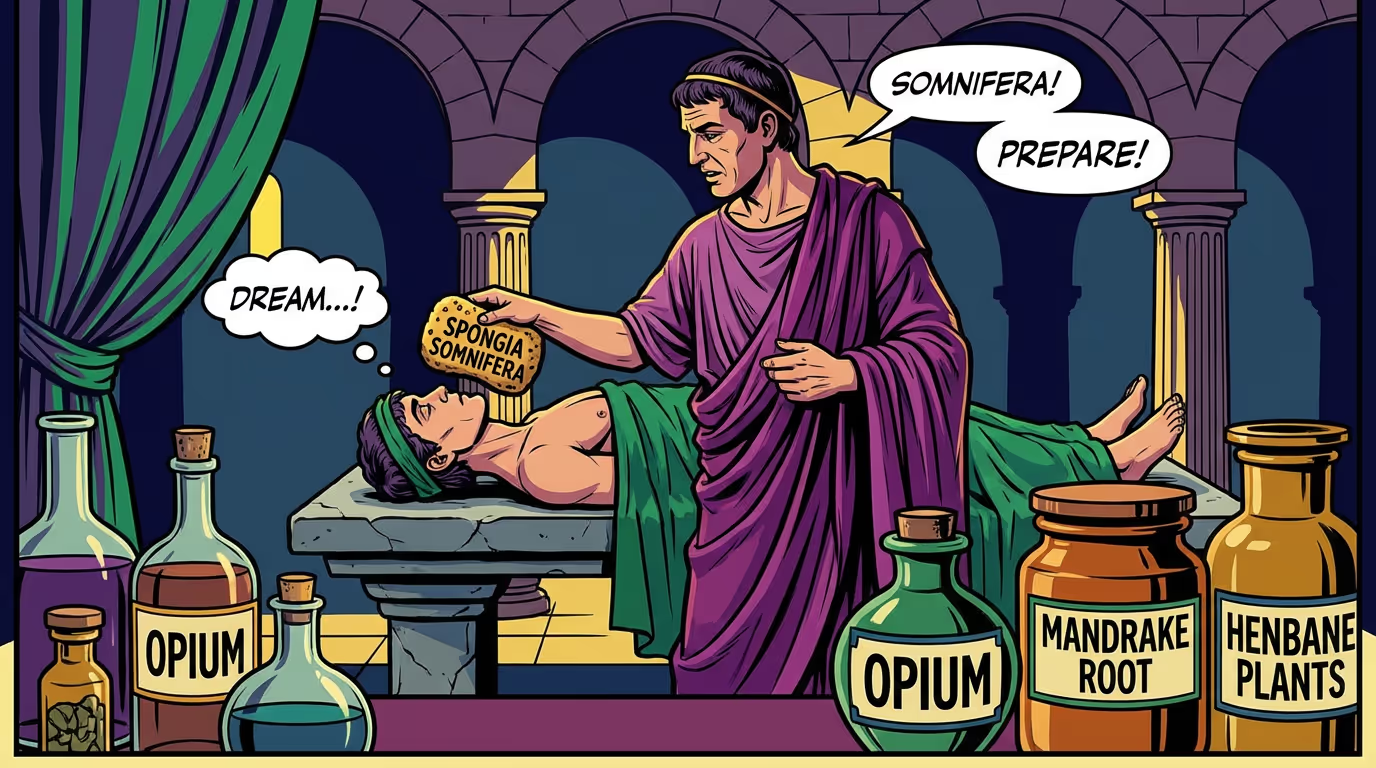
Imagine you're about to have your leg amputated by a Roman surgeon. The good news is, he's a highly skilled professional. The bad news is, the best anesthetic he can offer you is a cocktail of opium, henbane, and mandrake. Ancient Roman surgeries were not for the faint of heart, but their methods for pain relief and sedation were surprisingly sophisticated. They had a whole pharmacy of powerful plant-based drugs that could knock a patient out, and they weren't afraid to use them. Ancient surgeries were wild. 🌿
The Roman Anesthetic Cocktail
Roman physicians had a deep understanding of pharmacology, inherited from the Greeks and Egyptians. Their go-to anesthetics were a powerful trio of plants: **opium poppy**, **mandrake** (Mandragora officinarum), and **henbane** (Hyoscyamus niger). These weren't just mild sedatives; they contained potent psychoactive compounds that could induce a state of deep sleep or unconsciousness, making surgery possible.
The most famous Roman medical writer, Dioscorides, who served as a doctor in Nero's army in the 1st century AD, wrote a massive pharmacological handbook called *De Materia Medica*. In it, he described how to prepare these drugs for surgical use. Mandrake root, for example, was boiled with wine to create a concentrated tincture. Patients were given a dose of this "mandragora wine" to "fall into a deep sleep" before the surgeon began to "cut or cauterize" them. Opium, which contains morphine and codeine, was also widely used for its soporific (sleep-inducing) properties.
The Spongia Somnifera: The Sleep Sponge
One of the most fascinating methods of administering these anesthetics was the *spongia somnifera*, or "sleep sponge." This was a sea sponge soaked in a potent mixture of opium, mandrake, henbane, and other substances. The sponge was then dried and stored. When it was time for surgery, the sponge was rehydrated with hot water and held over the patient's nose and mouth. The patient would inhale the vapors, fall into a deep sleep, and the surgery could begin.
This method, which sounds like something out of a fantasy novel, was a standard practice in the Roman and medieval worlds. It was a primitive form of inhalational anesthesia, the same basic principle used in modern operating rooms. The combination of drugs provided a powerful sedative and analgesic effect, though the dosage was incredibly difficult to control.
A Dangerous Game
While effective, these ancient anesthetics were also incredibly dangerous. The active ingredients in mandrake and henbane are tropane alkaloids, such as scopolamine and atropine, which are highly toxic in large doses. Opium, of course, is also a powerful depressant that can cause respiratory failure. Roman physicians were well aware of these dangers. Dioscorides noted that opium was a "cooling" drug that could plunge a patient into a coma or even death if not used carefully.
The line between surgical anesthesia and a fatal overdose was razor-thin. The potency of the plants could vary widely depending on the season, the soil, and how they were prepared. This made dosing an art, not a science. Despite the risks, the use of these powerful herbal cocktails was a testament to the Romans' commitment to advancing medical science and their willingness to experiment with powerful drugs to alleviate human suffering. They were playing with fire, but for a patient facing the surgeon's knife, it was a risk worth taking. 🔥
Sources & More Reading
1. ScienceDirect - "Pain relief and sedation in Roman Byzantine texts"
This academic paper details the use of Mandragoras officinarum, Hyoscyamos niger, and Atropa belladonna, alongside opium, as the most important herbs for pain relief and sedation in Roman and Byzantine medicine.
2. American College of Surgeons - "History of Anesthesia Begins with Ancient Herbal Mixtures"
This article discusses the medieval "spongia somnifera" and the use of mandrake, henbane, and opium in anesthetic concoctions, highlighting the active tropane alkaloids like scopolamine and atropine.
3. Society for Ancient Medicine - "Pain Management in the Greek and Roman Mediterranean"
This source provides specific details from Dioscorides' *De Materia Medica*, explaining how mandrake was boiled with wine and used for surgery, and how opium was primarily seen as a soporific, with its analgesic properties being a secondary consideration.