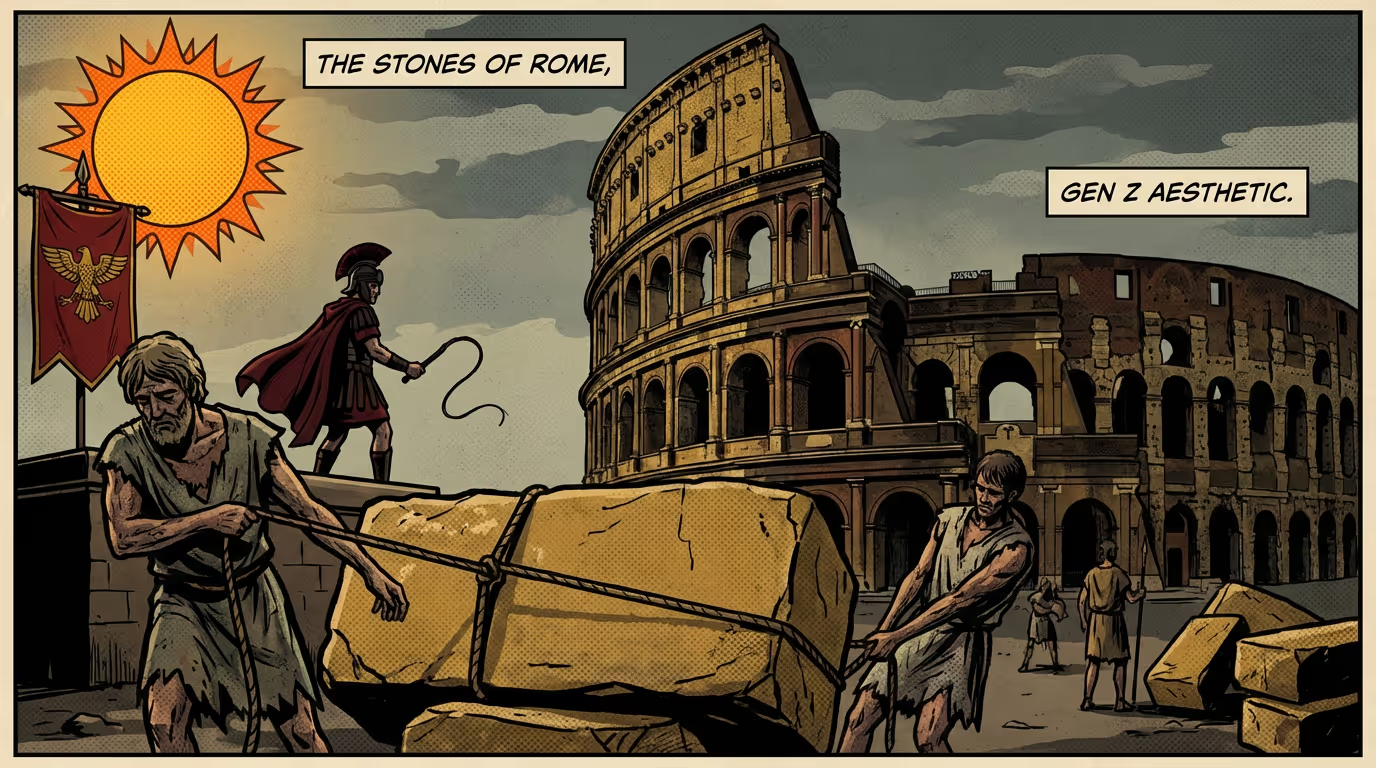
The Roman Colosseum is an icon of architectural genius, but its origin story is soaked in blood, conquest, and exploitation. The amphitheater wasn't just a stage for violence; it was born from it. The construction was funded by the spoils of a brutal war, and its foundations were laid by the hands of enslaved people. History is dark, and the Colosseum is one of its most famous monuments. 💀
Financed by the Destruction of Jerusalem
In 70 AD, Roman legions under the command of General Titus (soon to be Emperor) sacked the city of Jerusalem, ending the First Jewish-Roman War. The Romans didn't just conquer the city; they obliterated it. They destroyed the Second Temple, the holiest site in Judaism, and looted its sacred treasures. The spoils were immense—gold, silver, and priceless artifacts were hauled back to Rome.
So, what do you do with a mountain of war booty? If you're Emperor Vespasian, you launch one of the most ambitious building projects in history. An inscription found at the Colosseum confirms it: "The Emperor Titus Caesar Vespasian Augustus ordered the new amphitheater to be made from the (proceeds from the sale of the) booty." The Colosseum was a victory monument, paid for by the destruction of a city and its people.
Built by 100,000 Jewish Slaves? The Dark Legend
For generations, the story has been that the Colosseum was built by 100,000 Jewish slaves captured during the Siege of Jerusalem. It's a powerful and horrifying image: a people forced to build a monument to their own defeat. And it's a story that makes a lot of sense. After the war, Titus returned to Rome with an estimated 50,000 Jewish captives who were sold into slavery.
However, modern historians are more cautious. Nathan Elkins, an expert on Roman currency, points out that this claim is "unsupported by an ancient source." The idea seems to have originated with a 20th-century archaeologist and has been repeated ever since. While Elkins agrees that a significant number of slaves were used, he says, "we don't know 100 percent where those slaves came from."
It was grueling, backbreaking work. The construction took ten years and required moving 3.5 million cubic feet of travertine stone, plus tons of concrete, marble, and timber. Whether it was 50,000 or 100,000, it's undeniable that Jewish captives were among the enslaved workforce who toiled under the scorching Roman sun. As Elkins notes, forcing them to build the Colosseum would have been the ultimate insult: "You not only sell them into slavery, but then you make them build something that is financed by the destruction of their temple."
A Monument to Power and Cruelty
The Colosseum stands today as a marvel of Roman engineering. But it's also a grim reminder of the empire's brutality. It was a structure built on the profits of war and the backs of enslaved people. Every arch and every stone is a testament not only to Roman genius but also to the dark history of conquest that made it all possible. 🔥
Sources & More Reading
1. HISTORY - "How the Colosseum Was Built—and Why It Was an Architectural Marvel"
This article provides a great overview of the Colosseum's construction, including the debate over the use of Jewish slaves and the financing from the Siege of Jerusalem.
2. Aish.com - "The Colosseum's Jewish Connection"
This piece delves into the specific connection between the Colosseum's construction and the destruction of the Jewish Temple, providing historical and religious context.
3. Wikipedia - "Siege of Jerusalem (70 CE)"
For a detailed account of the military campaign that led to the capture of so many Jewish prisoners and the looting of the Temple, Wikipedia provides a comprehensive summary.