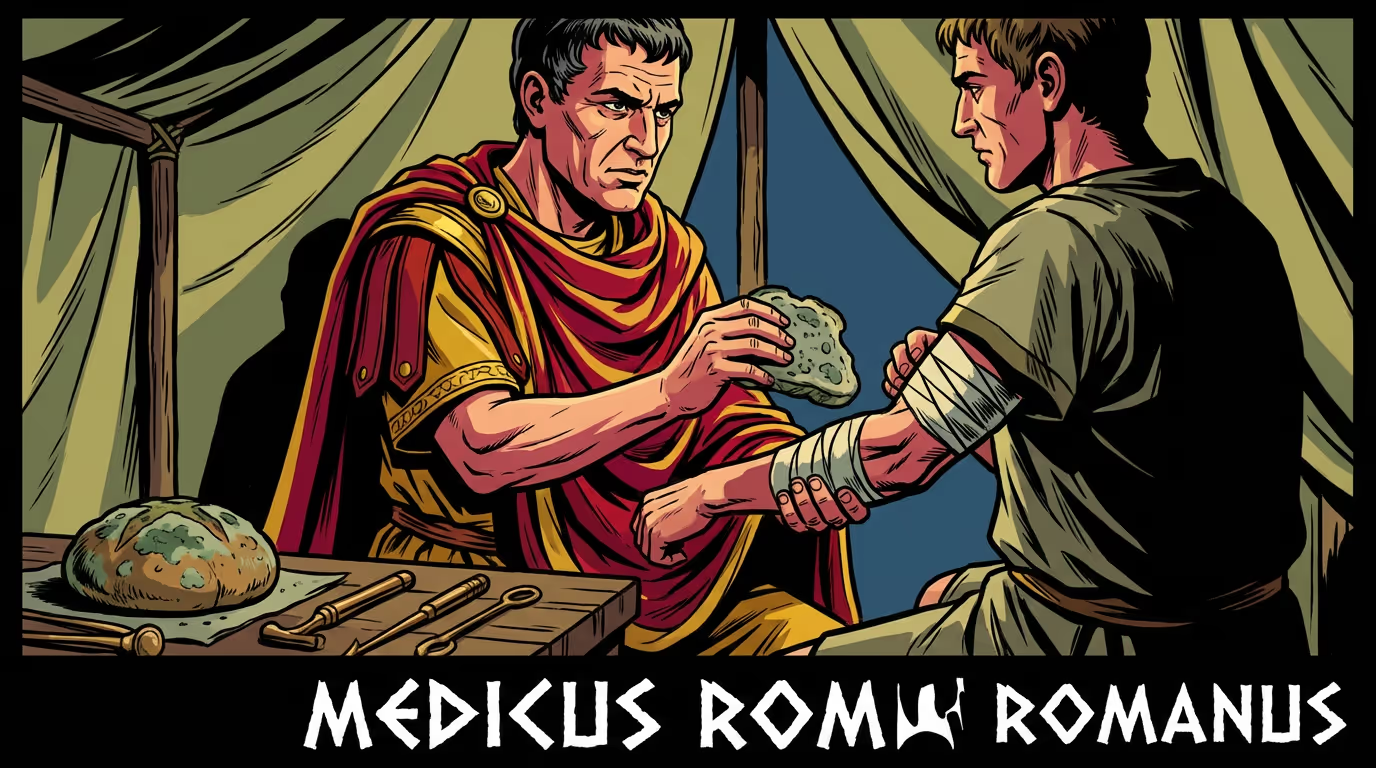
Long before Alexander Fleming's famous petri dish discovery in 1928, ancient civilizations were already fighting infections with a secret weapon: moldy bread. The ancient Egyptians, Greeks, and Romans all used moldy bread as a common medical treatment for wounds and sores. They didn't know about penicillin or bacteria, but through sheer observation, they figured out that some molds could stop infections in their tracks. They were accidentally using antibiotics 2,000 years before we even knew what they were. 🤯
The Ancient World's Go-To Wound Dressing
The practice dates back at least to ancient Egypt, where medical texts like the Ebers Papyrus (c. 1500 BC) describe applying moldy bread to infected wounds. The humid climate of the Nile Valley meant that mold grew everywhere, and ancient healers noticed that applying it to wounds seemed to help them heal faster. For the Egyptians, this was a mix of medicine and magic—a physical substance with a spiritual effect.
The Greeks and Romans inherited this tradition. Physicians like Hippocrates and the famous Roman doctor Galen (129-216 CE) also used moldy bread and wine-soaked cloths to clean and dress wounds. For them, it was less about magic and more about empirical evidence. They saw that it worked, so they kept doing it. In the Greco-Roman worldview, which was obsessed with balance (the four humors), mold was seen as a natural substance that could paradoxically restore health by fighting off the decay of an infection.
How Did It Work?
Not all molds are created equal. The specific molds that grow on bread can sometimes produce penicillin, the same active ingredient in modern antibiotics. When ancient physicians applied a poultice of moldy bread to a wound, they were essentially giving the patient a topical dose of a natural antibiotic. It was a complete shot in the dark—some molds might work, while others could be toxic—but it was better than nothing.
Roman medicine was surprisingly sophisticated when it came to wound care, largely thanks to the constant need to treat battlefield injuries. Roman physicians used a variety of antiseptic substances to clean wounds, including vinegar, wine, red ochre, and pine resin. They understood the importance of keeping wounds clean to prevent what we now call septic conditions. The use of moldy bread was just one tool in their surprisingly effective medical arsenal.
Accidental Genius
Of course, the Romans had no idea *why* moldy bread worked. They didn't know about microorganisms, bacteria, or the chemical compounds produced by fungi. Their use of mold was based on thousands of years of trial and error, passed down from the Egyptians and Greeks. It was a perfect example of empirical medicine: if it works, it works, even if you don't know the science behind it.
It would take another two millennia for Alexander Fleming to scientifically identify and isolate penicillin from the Penicillium mold. But the next time you take an antibiotic, remember that you're participating in a medical tradition that dates back to ancient healers slapping moldy bread on a wound and hoping for the best. History is wild. 🔥
Sources & More Reading
1. Nerdish.io - "When Mold Became Medicine: The History of Antibiotics"
This article provides a great overview of how ancient civilizations, including the Greeks and Romans, used moldy bread to treat infections long before the discovery of penicillin.
2. Brewminate - "Bread, Rot, and Remedy: Ancient Civilizations and the Hidden Curative Power of Mold"
This source explores the cultural and philosophical context of using mold as medicine in ancient Egypt, Greece, and China, explaining how it was viewed as both a natural and spiritual remedy.
3. World History Encyclopedia - "Drugs & Pharmaceuticals in Ancient Rome"
A detailed look at the sophisticated world of Roman medicine, including their use of antiseptics like vinegar and wine, and their advanced wound care techniques developed on the battlefield.