Think about the road you drive on every day. Now, imagine it still being perfectly usable in the year 4025. Sounds impossible, right? Modern roads barely last a few decades without turning into a pothole-ridden nightmare.
But the Romans? They built a network of over 200,000 miles of roads so ridiculously well-engineered that you can still drive, bike, and walk on them today. No, that's not an exaggeration. Two millennia later, the Roman Empire's infrastructure is still putting ours to shame. It's the ultimate historical flex. 💪
Built for Speed, Built to Last
Roman roads weren't just for scenic drives. They were the backbone of the empire's military might. The first major highway, the legendary Appian Way (or "Queen of Roads"), was built in 312 BC to move troops and supplies. The goal was speed. Roman legions could march a blistering 20 miles a day, and imperial couriers could cover 60 miles a day by swapping horses at roadside stations.
To achieve this, Roman engineers, or gromatici, were obsessed with straight lines. They used sighting poles to chart the most direct path, even if it meant going straight up a steep hill or tunneling through a mountain. Britain's Fosse Way, for example, only deviates by a few miles over its entire 180-mile length.
The Secret Sauce: Layers on Layers
So, what makes a 2,000-year-old road better than a modern one? It's all about the layers, baby. Roman construction was a masterclass in overkill.
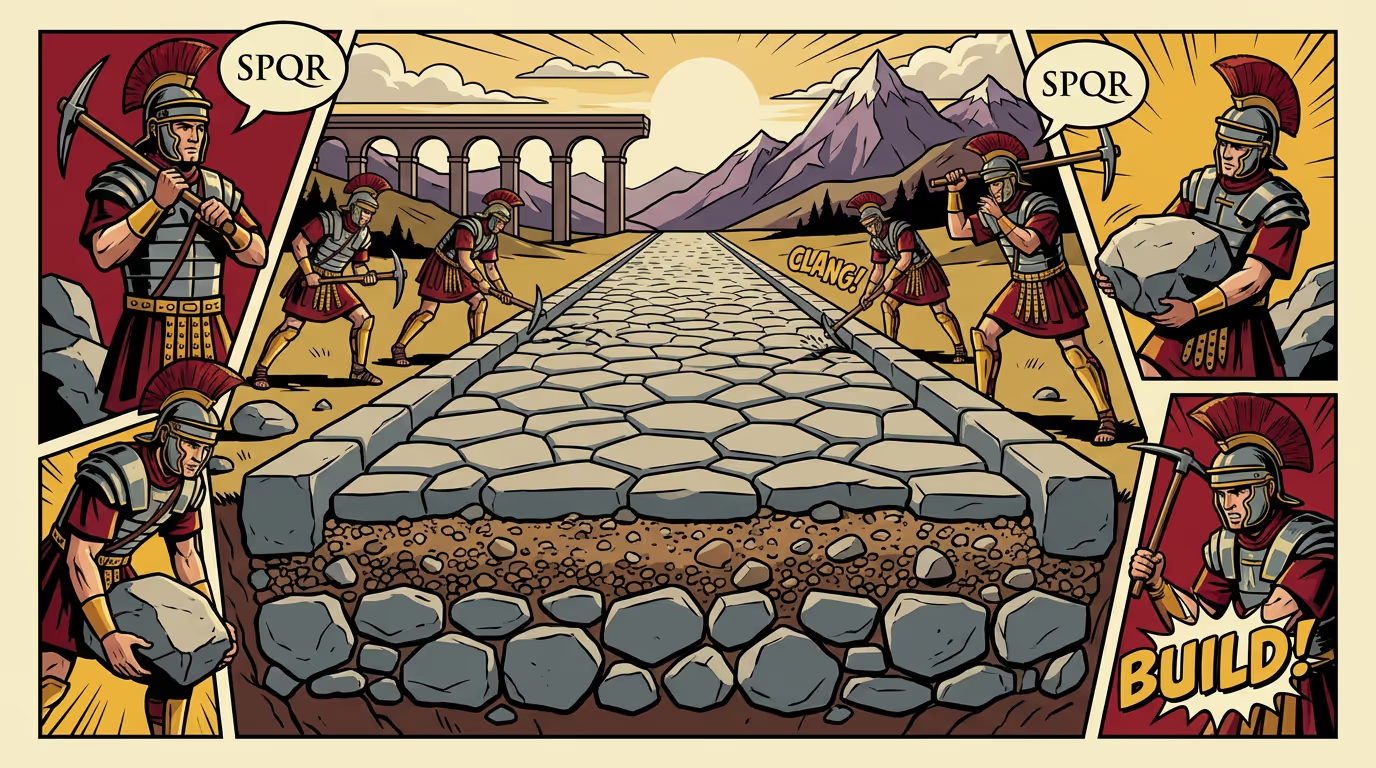
First, soldiers would dig a trench about 3-5 feet deep. The bottom was packed with earth and sand. This formed the foundation. Next came the Statumen, a base layer of large, flat stones laid down for a solid foundation. Above this was the Rudus, a 10-inch layer of smaller stones and gravel, often mixed with mortar. Then the Nucleus, a layer of fine gravel or crushed stone, like ancient concrete, was packed on top. Finally, the Pavimentum formed the surface, made of massive, perfectly fitted polygonal stones.
But the real genius was the cambered design. The road was built with a slight curve, sloping down from the center to the edges. This allowed rainwater to run off into drainage ditches built alongside the road, preventing water damage—the number one killer of modern roads.
You Can Still Use Them Today
This isn't just ancient history; it's a modern-day road trip. You can still travel on these engineering marvels. The Appian Way in Italy has sections that are perfectly preserved and open to tourists. Watling Street and Fosse Way in England are now covered by modern A-roads, meaning you can literally drive your car on a Roman route. The Via Claudia Augusta, which crosses the Alps from Italy to Germany, has been converted into a stunning long-distance cycling path.
Roman roads were so well-built they remained technologically unmatched until the 19th century. While our asphalt highways offer a smoother ride, Rome's 2,000-year-old roadways win the prize for durability, hands down. Modern construction could never. 🔥
Sources & More Reading
1. The Archaeologist - "The Remarkable Engineering of Roman Roads: A Legacy of Durability and Precision"
Provides a detailed, step-by-step breakdown of the multi-layered construction process and drainage systems.
2. History.com - "8 Ways Roads Helped Rome Rule the Ancient World"
Explains the military and administrative importance of the roads, including the system of post houses and patrols.
3. TheCollector - "9 Ancient Roman Roads That Still Exist Today"
Offers a fantastic list of specific roads you can still visit and travel on, from Italy to England to France.